History & Heritage
History of Parliament
The history of Parliament in The Bahamas is deeply woven into the story of the nation itself. For nearly three centuries, parliamentary government has provided a forum where representatives have debated issues affecting the people, shaped public policy, enacted laws, and helped guide the development of the Bahamian state.
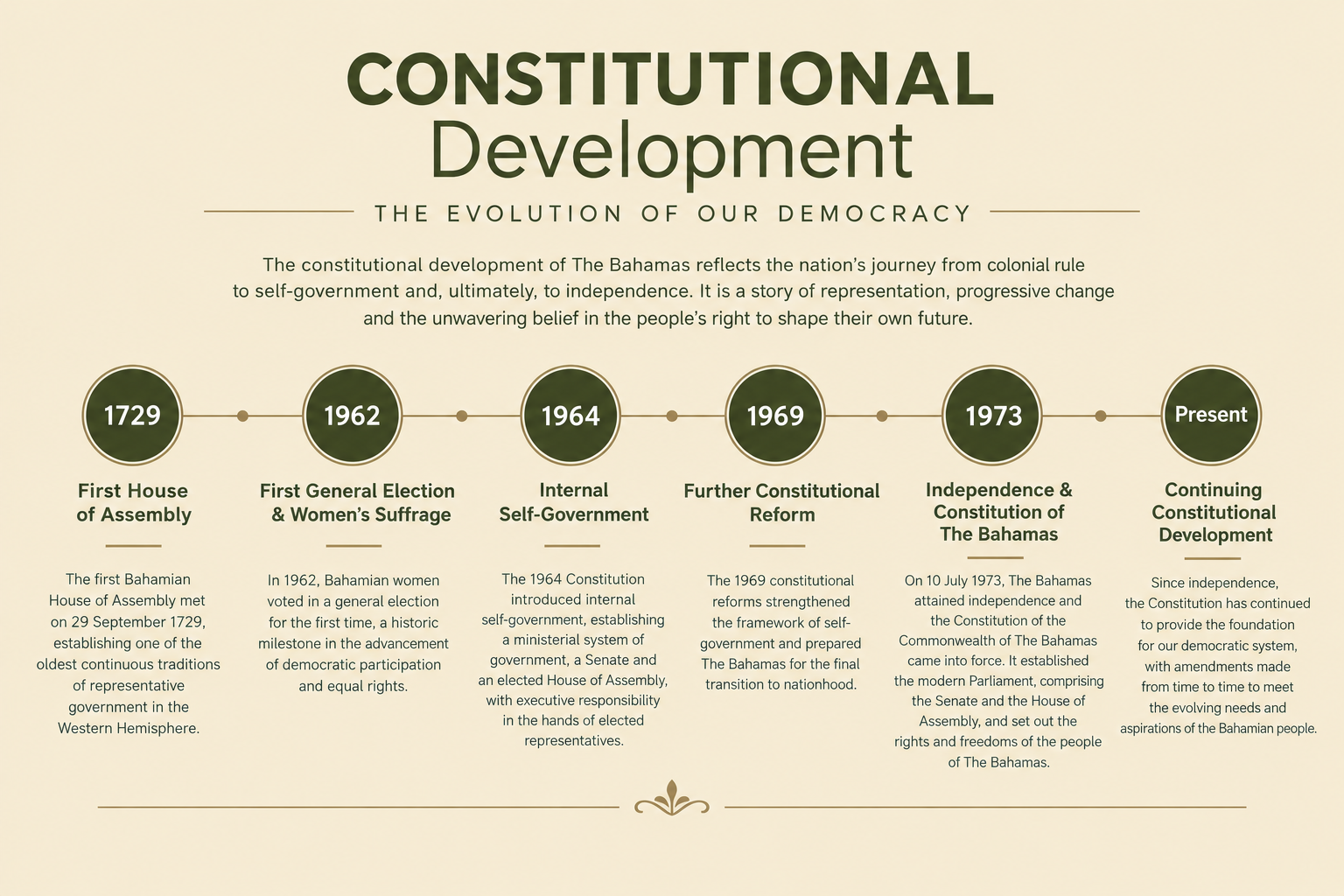
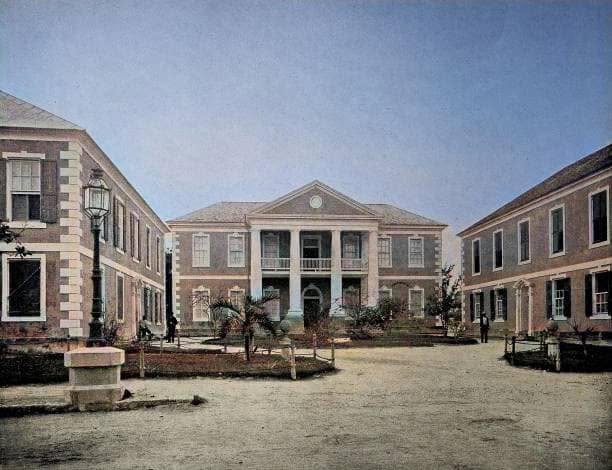
The roots of parliamentary government in The Bahamas can be traced to the colonial era. On 29 September 1729, the first Bahamian House of Assembly formally met, establishing one of the oldest continuous traditions of representative government in the Western Hemisphere. From its earliest beginnings, the Assembly provided an elected body through which representatives participated in the governance and legislative affairs of the islands.
During the colonial period, the legislature operated within a system that included an elected Assembly and an appointed Council, reflecting the British parliamentary tradition of the time. Over the years, the structure and responsibilities of the legislature evolved as The Bahamas moved toward greater political representation, internal self-government and, ultimately, nationhood.
The twentieth century marked a period of profound transformation in Bahamian parliamentary history. The expansion of political participation and the advancement of democratic rights helped reshape the legislature and the country it served. In 1962, Bahamian women voted in a general election for the first time, representing a significant milestone in the development of democratic participation. In 1964, The Bahamas achieved internal self-government, bringing greater responsibility for the governance of the country into Bahamian hands.
The struggle for representative government reached another defining moment on 10 January 1967, when the Progressive Liberal Party secured a majority in the House of Assembly and formed the Government. This historic election ushered in Majority Rule and became a defining chapter in the political development of modern The Bahamas.
The constitutional development of the country continued in the years that followed. In 1969, the constitutional framework was revised and the country became the Commonwealth of The Bahamas. This period laid important foundations for the transition to independence. On 10 July 1973, The Bahamas became an independent nation. The Constitution established the modern Parliament as the legislative branch of government, comprising the Senate and the House of Assembly. Parliament was entrusted with the responsibility of making laws for the peace, order and good government of The Bahamas.
Since Independence, Parliament has continued to serve as one of the central institutions of Bahamian democracy. Successive generations of Senators and Members of Parliament have contributed to the development of the nation through legislation, debate, representation and public service.
Today, the Parliament of The Bahamas stands as a living link between the country's past, present and future. Its history reflects the evolution of representative government, the expansion of democratic participation and the enduring principle that the people of The Bahamas should have a voice in the laws and decisions that govern their nation.
From the first meeting of the House of Assembly in 1729 to the modern Parliament of an independent Bahamas, the story of Parliament is a story of nation-building, representation and democracy.